
The Science Behind Soft-Tissue Laser Dentistry

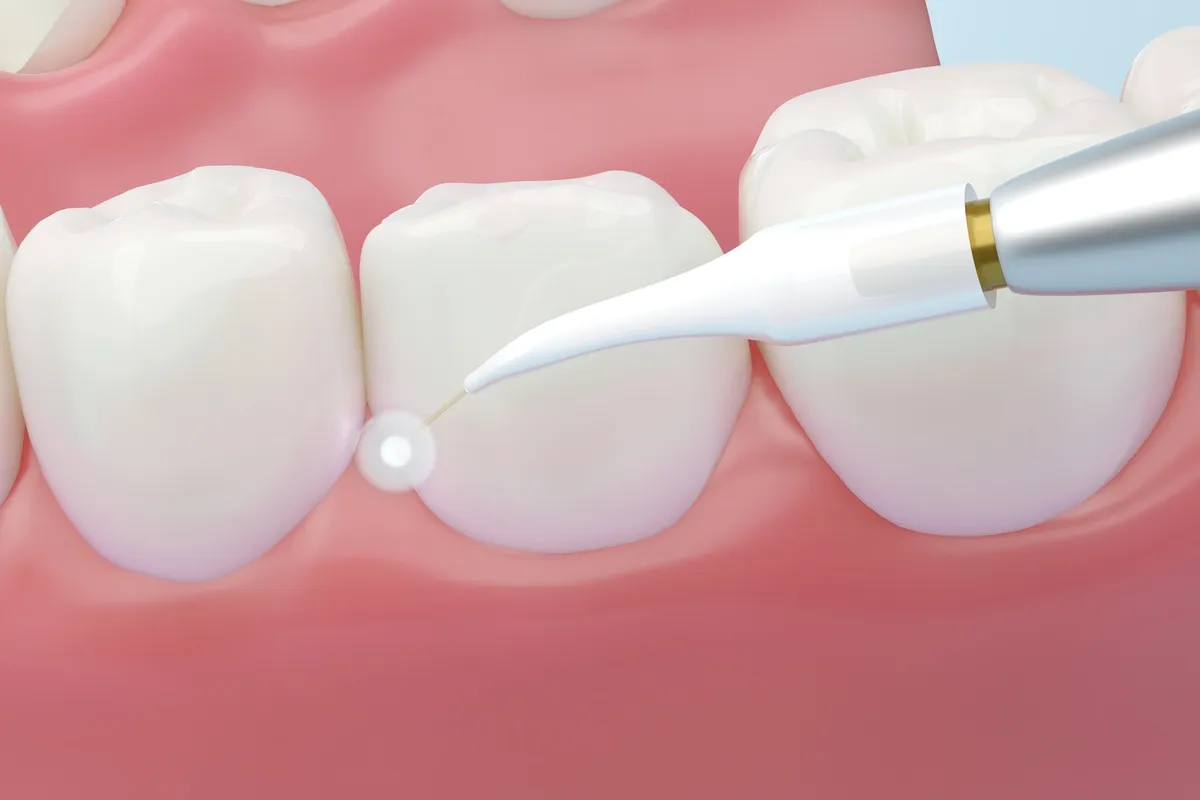
Dental laser tool and white teeth with healthy pink gums. 3D rendering.

While traditional gum surgery often meant scalpels, stitches, and weeks of recovery, modern dental technology has rewritten the rules entirely. Soft-tissue dental lasers transform procedures that once required invasive techniques into minimally invasive treatments patients can recover from in days rather than weeks. This technology harnesses focused light energy to reshape gums, treat periodontal disease, and perform delicate oral surgeries with remarkable accuracy.


At Distinctive Dentistry by Mullens & Nguyen in Jacksonville, our state-of-the-art facility features advanced soft-tissue laser technology as part of our comprehensive suite of dental innovations. Dr. Mullens and Dr. Nguyen integrate this precise tool into treatments ranging from cosmetic gum contouring to periodontal therapy, providing patients with comfortable experiences and faster healing times.

How Soft-Tissue Lasers Work

Soft-tissue lasers emit concentrated light at specific wavelengths absorbed by hemoglobin and water in gum tissue. When the laser contacts tissue, it converts light energy into heat, removing a microscopic layer of cells while sealing nerve endings and blood vessels.

This dual action explains why laser procedures often require less anesthesia than conventional methods. We can control the laser beam to fractions of a millimeter, enabling precise removal of diseased tissue while preserving healthy surrounding areas. This precision reduces trauma to adjacent tissues and promotes faster healing.

Different wavelengths serve specific purposes. Diode lasers, commonly used for soft-tissue procedures, penetrate tissue effectively while providing excellent hemostasis. We can adjust the settings based on the treatment, from gentle contouring to deeper tissue removal.

Benefits of Laser Technology in Gum Treatments

Soft-tissue lasers offer numerous advantages over traditional surgical methods, improving both the patient experience and clinical outcomes.

Reduced Pain and Discomfort

Patients undergoing laser gum treatments report significantly less discomfort during and after procedures. The laser’s ability to seal nerve endings as it cuts reduces pain signals, often eliminating the need for sutures. Many patients resume normal activities the same day without the prolonged recovery traditional surgery requires.

Lower Infection Risk

The sterilization effect of the laser beam decreases infection risk by eliminating bacteria in the treatment area, creating a cleaner surgical site. This antimicrobial action contributes to better healing outcomes and fewer post-procedure complications.

Minimal Bleeding

Reduced bleeding makes procedures more comfortable for both patient and dentist. The coagulation of blood vessels during treatment means clearer visibility for the practitioner and less blood loss for the patient. This benefit proves particularly valuable for patients with bleeding disorders or those taking blood-thinning medications.

Common Procedures Using Soft-Tissue Lasers

Soft-tissue lasers have become essential tools for numerous dental procedures, each benefiting from the technology’s precision and gentle approach.

Cosmetic and Therapeutic Applications

Gum recontouring addresses excessive gum tissue covering teeth, creating a “gummy smile.” The laser reshapes the gum line to reveal more of the tooth structure, improving aesthetic appearance. This cosmetic procedure typically takes less than an hour and produces immediate, visible results.

Treating gum disease with lasers involves removing infected tissue from periodontal pockets. The laser eliminates bacteria while stimulating healthy tissue regeneration. This approach often serves as an alternative to traditional scaling and root planing for patients with moderate periodontal disease.

Additional Laser Treatments

Common procedures performed with soft-tissue lasers include:

  • Frenectomies to release tongue or lip tissue attachments causing speech or orthodontic issues, which affect about 8% of babies under age one
  • Biopsy procedures for suspicious lesions with minimal discomfort and scarring
  • Crown lengthening to expose more tooth structure for restorative work
  • Removal of excess tissue around dental implants

These procedures benefit tremendously from laser technology’s quick, minimally invasive approach. Most require no stitches and heal rapidly, making them particularly suitable for patients of all ages.

What to Expect During Recovery

Most patients experience minimal discomfort following laser procedures. Any tenderness typically responds well to over-the-counter pain medication. The treated area may appear whitish or grayish temporarily as new tissue forms, which is a normal part of the healing process. Swelling remains minimal compared to traditional surgery. Patients can usually eat soft foods immediately and gradually return to their regular diet within a day or two.

Maintaining good oral hygiene remains essential, though you should avoid brushing the treated area directly for the first day. Follow-up appointments allow your dentist to monitor healing progress. Most soft-tissue laser procedures heal completely within one to two weeks, significantly faster than the three to four weeks traditional surgery often requires.

Get Advanced Dental Care With Soft-Tissue Laser Treatments at Distinctive Dentistry by Mullens & Nguyen

Modern dental technology transforms how we approach oral health treatment, making procedures more comfortable and recovery faster. At Distinctive Dentistry by Mullens & Nguyen, Dr. Mullens and Dr. Nguyen combine their artistic precision with state-of-the-art tools, like our soft-tissue laser, to deliver unparalleled comprehensive dentistry. As a Fellow of the American College of Dentists, Dr. Mullens brings uncompromising dedication to every procedure, while Dr. Nguyen’s creativity and attention to detail ensure natural-looking results.

We believe in creating a personal, family environment where you feel truly cared for and excited about your dental health potential. Whether you’re interested in gum recontouring, periodontal treatment, or exploring how our advanced technology can improve your smile, our team provides compassionate care grounded in innovation. Take the first step toward experiencing truly enjoyable dental visits by scheduling your appointment today.

Office Hours

8:00 am – 5:00 pm
8:00 am – 5:00 pm
8:00 am – 5:00 pm
8:00 am – 5:00 pm
8:00 am – 11:30 am

Something Stuck Between the Teeth

If you have any food debris or an object stuck between your teeth, don’t try to remove it with a toothpick or any sharp objects, as this could damage your gums. Typically, gently flossing around the tooth and rinsing your mouth with saltwater can help dislodge it. However, if you’re not having any luck, you can also give our office a call. Our dental hygienists have all of the necessary tools to safely remove the debris.

Jaw Pain

Is Jaw Pain a Dental Emergency? Lockjaw, jaw tension, and pain are just a few of the many different types of jaw pain. If your discomfort is chronic, our team can help you determine the underlying cause of it and refer you to a specialist if necessary. However, if your pain is a result of an impact, visit your local emergency room.

How You Should Handle Jaw Pain: Our team is happy to provide you with further guidance over the phone if you’re unsure of where to go for help. You can place an ice pack on the outside of your face to relieve any discomfort.

How We Treat Jaw Pain: If you believe your jaw is broken, dislocated, or damaged due to trauma, visit your local ER immediately. If it’s a reoccurring issue, our team can help you determine best next steps for finding relief after conducting an examination.

Injury to the Gums, Lips, or Tongue

Is an Injury to the Gums, Lips, or Tongue a Dental Emergency?  If your oral injury doesn’t stop bleeding after 10 minutes, you may need to go to the emergency room. Or, if you’re conflicted about what to do, give our office a call and our team can help.

How You Should Handle an Injury to the Gums, Lips, or Tongue: Oral wounds can bleed a lot, and when the blood mixes with the saliva, it can make the injury look a lot worse than it is. You can stop the bleeding by using a clean washcloth or piece of gauze and pressing it against the cut. A cold compress can help to reduce any swelling that may occur.

How We Treat Injuries to the Gums, Lips, or Tongue: Our team typically doesn’t see patients for injuries. If you require stitches or the bleeding doesn’t stop within 10 minutes of placing pressure on it, visit your local emergency room.

Loose Permanent Tooth

Is a Loose Permanent Tooth a Dental Emergency? If your tooth is wiggling in its socket or partially dislodged, try to get to our office as soon as possible to prevent any further damage. If you’re experiencing pain, our team can provide you with first aid guidance over the phone.

How You Should Handle Loose Permanent Teeth: Avoid touching your tooth and eating any foods (especially those that are chewy or sticky), and rinse your mouth with lukewarm saltwater to remove any debris and cleanse the area. Avoid flossing or brushing your teeth until you’re able to see us.

How We Treat Loose Permanent Teeth: If your tooth has become partially dislodged due to impact, our team may be able to salvage it and see if the roots are able to re-fuse with the bone. In the case that your tooth can’t be saved, we may recommend an extraction and replacement with a dental implant or bridge.

Broken Denture

Is My Broken Denture a Dental Emergency? Whether your denture has broken to the point of it being unwearable or it just has a crack, you should never wear a damaged prosthetic. It can lead to irritation of the oral tissues in addition to jaw discomfort. If you have existing teeth and try to wear your damaged denture, it could also harm those teeth. Call our office immediately so our team can assess your prosthetic.

How You Should Handle a Broken Denture: Although your local department store likely sells a denture repair kit, do not try to superglue or repair your own dentures. The best option in this scenario is to see a professional as soon as possible.

How We Treat Broken Dentures: Our team will examine your dentures and see if we’re able to repair them. If they’re damaged beyond repair, we can start the process of replacing them for you.

Lost Filling or Crown

Is a Lost Filling or Crown a Dental Emergency? Yes, both of these situations warrant an immediate call to our Jacksonville dental office. That way, we can repair or replace your restoration as quickly as possible.

How You Should Handle a Lost Filling or Crown In addition to reaching out to us to schedule an appointment, we recommend not eating anything crunchy, hard, or sticky. Additionally, keep your restoration somewhere safe, like a small, clean container.

How We Treat Lost Fillings or Crowns There are some cases where we can re-cement your restoration back in place, like if your dental crown is relatively new and in good condition. Other times, our only option is to replace your dental crown or filling with a new one.

Knocked-Out Tooth

Is My Knocked-Out Tooth a Dental Emergency? Since this dental injury can cause a significant amount of pain and there is only a small window of time where we can save your tooth (about 60 minutes), the answer is “yes!” So, don’t hesitate – contact our Jacksonville dental team right away to schedule an emergency appointment.

How You Should Handle a Knocked-Out Tooth Calling us is an important first step. This ensures that we can schedule an appointment for you with one of our dedicated emergency dentists right away. Plus, it allows us to guide you through the process of preserving the root of your tooth – whether that’s by placing it back in its socket or putting it in a clean container filled with milk.

How We Treat Knocked-Out Teeth Fortunately, a knocked-out tooth can sometimes be saved. If that’s not the case for some reason – like you weren’t able to find your tooth – then we will instead begin the process of replacing it with a dental bridge or implant so the look, health, and function of your smile are restored.

Very Sensitive Teeth

Are Very Sensitive Teeth a Dental Emergency? Very sensitive teeth can be a dental emergency. That’s why it’s important to consider how long you’ve been experiencing symptoms and if they are present in tandem with others, like pain when biting down.

How You Should Handle Very Sensitive Teeth There’s really only one thing you can do until your appointment: try to avoid things that could exacerbate your discomfort. In other words, don’t drink anything really hot, don’t eat anything really cold, and take OTC pain medication as directed on the label (if needed).

How We Treat Very Sensitive Teeth That depends on what’s causing your dental sensitivity. If it’s a cavity, then it’s likely that a tooth-colored filling or dental crown is the answer. If it’s an infection in your gums, then gum disease treatment is needed instead.

Cracked Tooth

Is a cracked tooth a dental emergency? Cracked teeth are considered dental emergencies and you’ll need to visit your emergency dentist as soon as possible. Leaving your tooth untreated can allow it to be vulnerable to further damage and bacteria. Before the situation worsens, schedule an appointment with our team so we can determine the best way to address your tooth.

How you should handle a cracked tooth: Refrain from chewing on that side of your mouth, otherwise you could end up disturbing your injured tooth. Take over-the-counter pain relievers to minimize discomfort. You can also rinse with saltwater to keep your tooth bacteria-free. If you notice any sharp or jagged edges on your tooth, you can use dental wax or sugar-free gum to protect your soft oral tissue.

How we treat cracked teeth: We’ll examine your cracked tooth to determine the cause of the situation as well as the proper treatment for it. If the crack is minor, then we can typically address it with composite resin to improve and strengthen your tooth. For more severe damage, you may require a dental crown to repair the structure and prevent future discomfort. If the tooth cannot be saved, then we’ll likely have to extract it and replace it with something else, such as a dental bridge, partial denture, or dental implant.

Chipped Tooth

Is a chipped tooth a dental emergency? Chipping your tooth isn’t always considered an urgent dental situation, so it isn’t the end of the world if you don’t get it treated right away. That said, leaving it exposed to bacteria for too long can lead to problems later on. Before the situation can become worse, it’s best to visit your dentist for help.

How you should handle a chipped tooth: Until you’re able to see us for treatment, be sure to avoid chewing on that side of your mouth. Be gentle when brushing your teeth and gums, and don’t hesitate to use dental wax to cover up any rough or sharp edges you might notice. This can help you prevent harming your cheeks or other soft oral tissue.

How we treat chipped teeth: Chipped teeth can typically be treated by using composite resin to repair and improve them. However, if the damage is more visible and toward the front of your smile, then veneers might be the longer-lasting solution you’re looking for.

Toothaches

Is my toothache a dental emergency? Toothaches can be due to various reasons, some of which might not be particularly urgent. Even so, this can sometimes be an indication of a more serious dental emergency, such as an oral infection. That’s why it’s best to visit your dentist sooner rather than later so that they can address the underlying problem before it grows.

How you should handle a toothache: Rinse your mouth with saltwater to sanitize the area, dislodge any stuck objects between your teeth, and help alleviate any discomfort. You can also take over-the-counter pain medications to further minimize the aching.

How we treat toothaches: Our team will need to thoroughly evaluate your smile to determine the root cause of your toothache. If it’s due to periodontal issues, then we’ll provide gum disease treatment. Other procedures to get rid of your toothache might involve root canals or tooth extractions, if necessary. We’ll be sure to walk you through your options before moving forward with any treatment.