



Losing teeth is one of the most significant changes a person can experience in their oral health journey, and for many adults, it raises a pressing question: what comes next? Whether you have lost several teeth or an entire arch, modern dentures at Distinctive Dentistry by Mullens & Nguyen offer a natural-looking, comfortable solution that restores both function and confidence.
Dr. Richard Mullens, DDS, brings 35+ years of clinical knowledge and a Fellowship in the American College of Dentists to every prosthetic case. Dr. James Nguyen, DMD, applies a fine arts background to ensure every denture is crafted for natural aesthetics and proper proportion. We offer partial dentures, full dentures, and implant-supported dentures tailored to your specific anatomy, lifestyle, and goals. Patients throughout Jacksonville, Ponte Vedra Beach, Jacksonville Beach, and the surrounding communities trust our team for comprehensive dental services that restore their quality of life. Call (904) 399-3163 or request an appointment online.
Care provided by Dr. Richard Mullens, DDS and Dr. James Nguyen, DMD — Distinctive Dentistry by Mullens & Nguyen, Jacksonville, FL.

Quality dental care made accessible with payment plans designed to fit your family’s financial needs. We accept most dental insurance and offer flexible financing through CareCredit.

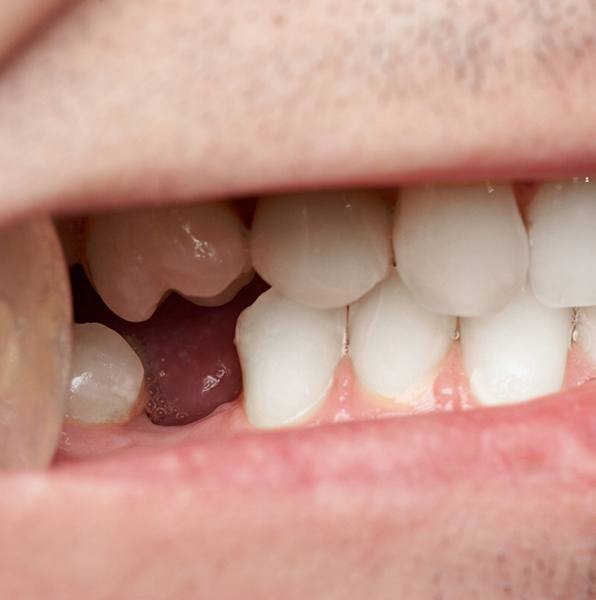
Not every patient’s situation is the same, which is why we offer several denture options to match your specific needs, anatomy, and lifestyle goals. Understanding the differences between each type helps you make an informed decision and set realistic expectations for your treatment.
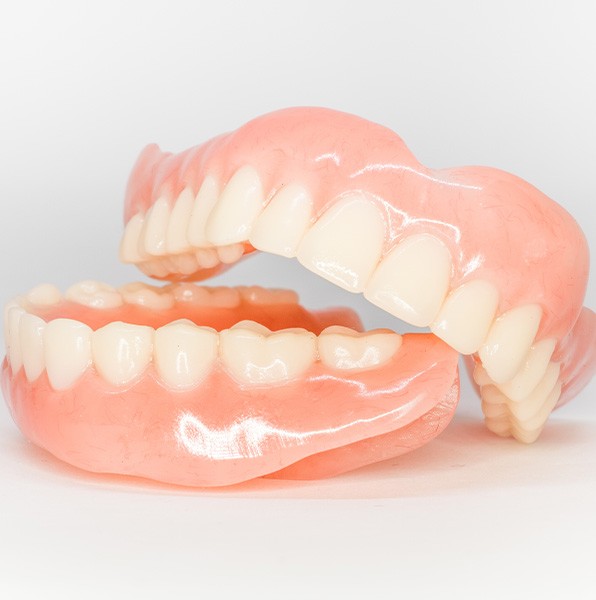
Full dentures replace an entire arch of missing teeth, resting directly on the gum tissue and held in place through natural suction. We craft full dentures from high-quality, gum-colored acrylic fitted with lifelike prosthetic teeth, carefully matched in shape and shade to complement your facial features. Most patients adapt comfortably within a few weeks of receiving their final restoration.
If you still have healthy remaining teeth, a partial denture may be the right choice. Partial dentures fill in the gaps left by multiple missing teeth while clasping onto your existing teeth for stability. They are a practical, cost-effective solution for patients who prefer a removable restoration or are not candidates for implants.
Immediate dentures are placed the same day your remaining teeth are extracted, so you never have to go without a smile during the healing process. Because your gums and bone change shape as they heal, immediate dentures typically require several relines or adjustments over the following months. Our team will work closely with you throughout to ensure a comfortable, well-fitting result.
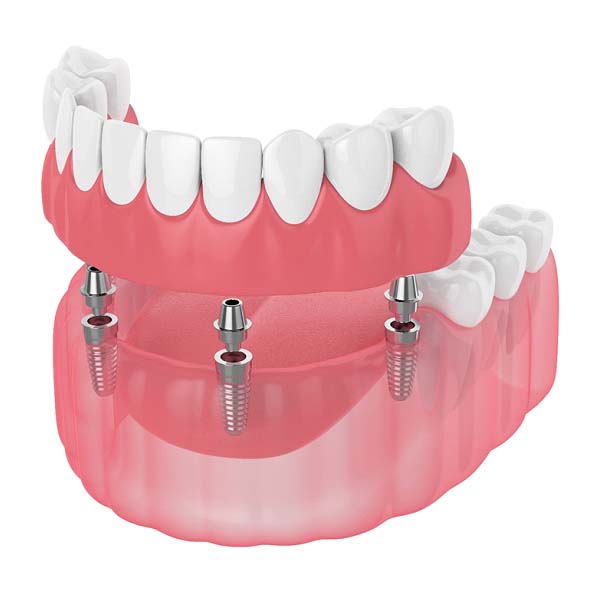
For patients seeking the most secure option, implant-supported dentures combine the coverage of traditional dentures with the stability of dental implants in Jacksonville. Small titanium posts anchored in the jawbone eliminate the slipping associated with conventional dentures and help preserve jawbone density over time. Implant-supported dentures are considered the gold standard for patients who want the closest thing to natural teeth in terms of function and feel.

According to the American College of Prosthodontists, the common causes of missing teeth include cavities, periodontal disease, and trauma. When you have suffered from tooth loss, you can expect many negative consequences, like facial sagging, difficulty speaking, trouble eating, and a reduction in your self-esteem. These can all take a toll on your quality of life.
What Qualifies You for Dentures?
If you have lost multiple or all of your teeth, have extreme tooth sensitivity, or endured significant decay, dentures could be the life-changing tooth replacement option you’ve been hoping for. To get dentures in Jacksonville, it is important that you have sufficient, healthy gum tissue and jawbone. You must also be committed to maintaining an excellent oral hygiene routine.
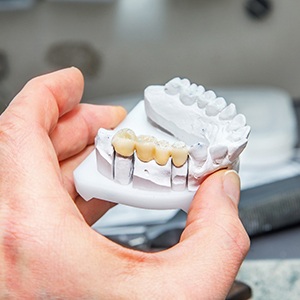
If you don’t make a good candidate for dentures, another tooth replacement option may be better suited to meet your needs:
Dental Bridges: Dental bridges are an excellent option for patients who have only lost one or a few teeth. They require that you have healthy teeth surrounding the gap to properly support the bridge.
Dental Implants: With this procedure, a titanium post is surgically inserted into the jawbone to anchor your replacement tooth into place. This means that you need to have a solid bone structure. This option costs more than dental bridges and dentures in Jacksonville, but it is a permanent tooth replacement option.
Getting dentures is a multi-step process, and knowing what lies ahead can make each appointment feel far less daunting. We begin with a comprehensive consultation where we evaluate your oral health, take digital impressions, and discuss your goals and budget. Our Sirona CBCT 3D imaging system allows us to assess bone structure in detail, which is especially important when planning implant-supported options.
After your initial impressions are taken, our dental lab fabricates a custom denture built to the precise dimensions of your mouth. We then schedule a fitting appointment where you’ll try in the denture, and we’ll note any pressure points, bite discrepancies, or aesthetic adjustments needed. Minor refinements are completely normal, and most patients require at least one follow-up before their denture feels fully comfortable. Our team is committed to making sure your final restoration fits correctly and functions beautifully.
One of the most common questions patients ask is how long it takes to feel comfortable with dentures. The honest answer is that it varies, but most people adapt within a few weeks to a couple of months. In the beginning, the American Dental Association recommends starting with soft foods and practicing chewing on both sides of the mouth to distribute pressure evenly and help you find your balance.
Speaking may feel slightly different at first, particularly with certain sounds like “s” and “f.” Reading aloud and practicing common phrases at home can speed up this adjustment. Avoid extremely hard or sticky foods, especially in the initial weeks, as these can dislodge or damage the prosthetic. Over time, many patients find they can return to most of their favorite foods with confidence. If at any point your denture feels loose, causes sore spots, or shifts during eating, it’s a clear sign it’s time for an adjustment visit.
Proper daily care keeps your dentures functioning well and extends their lifespan significantly. These habits are simple to incorporate and make a meaningful difference in long-term comfort and hygiene. Here is what we recommend to every denture patient:
Attending regular checkups is equally important for monitoring your gum tissue and ensuring your denture still fits as your jaw naturally changes over time.
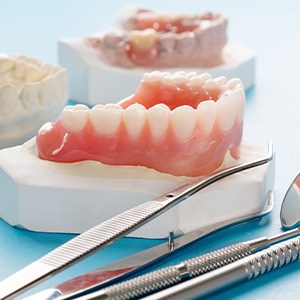
Dentures contain two main parts: the base and the pontics (artificial teeth). Each component is described in more depth below:
Denture base. This portion is what gives your prosthetics the support they need to retain their shape. It can be made from several materials such as acrylic, nylon, porcelain, composite resin, or metal. Usually, full dentures utilize an acrylic base because it can be individualized to look like your gum tissue. Partial dentures frequently contain metal clips in conjunction with acrylic to anchor to healthy teeth in your mouth.
These typically are built out of porcelain or resin because both materials reflect light like enamel and can be color-matched to your natural teeth. Ceramic is the standard because it looks and feels so lifelike, though it can be abrasive against remaining teeth and is often recommended for full dentures.
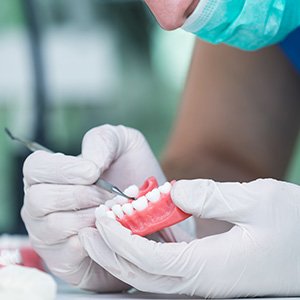
It might vary slightly depending on your unique circumstances, but usually, creating your restoration requires the following step-by-step process:
Step 1: At your consultation appointment, our team will make digital impressions of your upper and lower teeth and gums using state-of-the-art technology. This builds a virtual model of your mouth that can be shared with a special dental laboratory to design your dentures.
Step 2: After receiving all the necessary images and information, a technician will build a cast of your jaw and create a wax version of the gumline.
Step 3: Pontics are set into place using a device known as an articulator. Then, the tech shapes and carves the wax to give it a more natural appearance.
Step 4: The wax dentures are returned to us so we can schedule you for a fitting. If everything checks out, we’ll send them back to be finalized.
Step 5: Back at the lab, a tech places this model into a flask filled with plaster to maintain the shape of your modeled dentures. Next, this container is placed in hot water to melt away the wax portions.
Step 6: Holes are made in the pontics so they attach appropriately, and a liquid separator is added into the plaster to keep acrylic from sticking to it. Then, acrylic is injected into the flask to replace the wax.
Step 7: The plaster is carefully chipped away using special instruments, revealing the restoration inside. Then, your dentures are placed in a sonic bath to remove any remaining residue.
Step 8: Excess acrylic is trimmed away, and your new prosthetics are polished to perfection.
Step 9: The lab returns your completed restoration to us so we can schedule your final fitting.
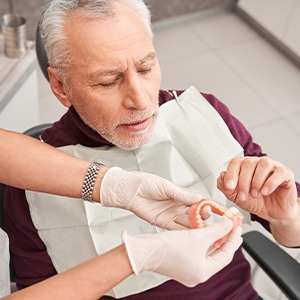
It’s natural to feel some discomfort until your mouth acclimates to supporting your dentures, which can often take about a month. In that time, you might notice that you develop a lisp or other challenges trying to enunciate words. You might also struggle to chew with them until your tongue and other supporting muscles learn to work around them.
To ease your transition, you might start off by sticking to soft foods that are easier to bite into. You can also practice difficult words or sounds until you can communicate as clearly as ever. If you have persistent pain or sores that have become infected, please let us know so we can schedule a time for you to come in.
⭐⭐⭐⭐⭐ Rated 5.0 by Jacksonville patients on Google
Restore your complete smile today — quality dentures in Jacksonville, FL with flexible monthly payment plans through CareCredit and Cherry to make tooth replacement affordable.

Many dental insurance plans offer at least partial coverage for dentures, particularly full dentures following tooth extraction. Our team at Distinctive Dentistry by Mullens & Nguyen will help you understand your dental insurance benefits and maximize whatever coverage you have available. For the portion not covered by insurance, we offer flexible financing through CareCredit and Cherry, both of which allow you to break the cost of treatment into manageable monthly payments. We believe that a fully functional, beautiful smile should be accessible to everyone, and we work hard to make that a reality for our Jacksonville patients.
If you’re exploring options beyond dentures, we also welcome a conversation about our full tooth replacement options in Jacksonville to help you determine which approach is the best long-term fit for your health and your budget.

Missing just one of your teeth can lead to various psychological downsides. Most people struggling with tooth loss end up feeling self-conscious about their appearance and might refrain from participating in social events altogether. By renewing your bite with dentures in Jacksonville, you’ll be free to show off a grin that you’re proud of, which can also help significantly reduce any anxiety about your speech, chewing ability, appearance, and more.

In order to speak most clearly, we typically press our tongue and lips against our teeth to enunciate certain sounds and words. However, missing some of them can make it difficult to pronounce sentences properly. Fortunately, you can easily replace lost teeth with dentures in Jacksonville, FL, allowing you to enjoy a complete grin as well as providing you the necessary structure for speaking clearly again. It can take some time to get used to your prosthetics, but a little practice can make this process smoother.

By wearing dentures, you can effectively restore a large majority of your natural chewing power. This means you’ll be free to expand your dietary choices, including nutritional foods like fruits, veggies, low-fat dairy, and lean proteins. Being unable to properly chew your meals can end up increasing the risk of indigestion and malnutrition, which can affect both your oral and overall health. This makes dentures an incredibly beneficial treatment for your bodily well-being.

Any remaining natural teeth that you have will start to shift out of place to fill in any gaps left from tooth loss. Dentures, however, can serve as placeholders and prevent dental shifting for years to come. Additionally, with a more even bite, you can reduce the risk of wearing down your natural enamel due to the pressures of chewing.

Once you’ve regained a full bite, you can be sure to feel more comfortable showing off your new smile. Since your smile is one of the first things people will notice about you, it’s important to be able to present a full grin. Not only will you feel more confident, but others will also perceive you as more outgoing and approachable, expanding your social and professional opportunities in the long run.
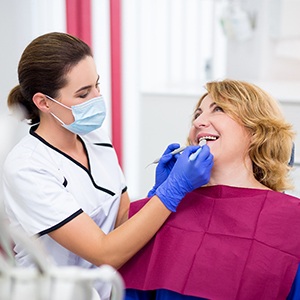
When calculating the total cost of dentures in Jacksonville, there are many factors you must take into consideration. A few major elements that influence the overall price include:
Any preliminary dental work you need (i.e., tooth extractions or periodontal therapy)
Number of teeth you’re missing
Type of acrylic used for the base, which is what’s dyed to match the color of your gum tissue
Materials your replacement teeth will be made of (usually porcelain or acrylic)
If you’re on a budget, you may be tempted to opt for a cheaper denture. However, that’s not recommended. More affordable oral appliances tend to break easily and will need a replacement much sooner than anticipated. For that reason, it’s always a good idea to invest in high-quality and durable dental work.
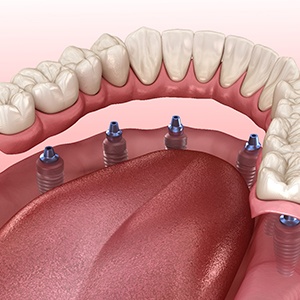
Yes, mainly because they require oral surgery and the placement of multiple dental implants. Most patients find implant dentures to be worth every penny because they’re far more reliable for day-to-day use. Since implants are firmly rooted into the jawbone, they’ll stay in place while in use. Plus, they help stimulate the jawbone to provide you with increased biting strength and longevity. With proper care and maintenance, you can expect your fully functioning grin to last several decades.

Most dental insurance plans cover around 50% of the costs associated with dentures. Of course, every policy is unique, meaning the exact level of coverage can vary significantly from person to person. Before committing to anything, you should confirm the details of your plan with your insurance provider. Our team at Distinctive Dentistry is happy to assist you in maximizing your benefits.

We understand that some people may not have dental insurance, or their plan doesn’t cover as much of the costs as they thought it would. Fortunately, we offer other solutions to make your care as affordable as possible. At Distinctive Dentistry, you can apply for third-party financing through CareCredit. It allows you to split up the total cost of your care into smaller monthly installments. With this option, you can make even the most involved dental treatment fit your budget.
Ultimately, the best way to get an accurate cost estimate is by attending a consultation with our team. We’ll happily address any concerns you have and do what we can to keep your out-of-pocket expenses as low as possible.
It’s incredibly important to be mindful of the foods you eat to keep your smile free of harm. You should avoid sticky foods like peanut butter and gummy candies because they can pull your dentures out of place. Plus, it makes it easier for food particles to get trapped underneath the oral appliances, causing gum irritation. It’s also a good idea to avoid foods like popcorn, shelled nuts, apples, corn on the cob, and tough meats because they can damage or dislodge your dentures.
Losing teeth does not have to mean losing the life you love. At Distinctive Dentistry by Mullens & Nguyen, Dr. Mullens, Dr. Nguyen, and Dr. Myers bring decades of combined experience, an artistic sensibility, and a genuine care for every patient to each denture case we treat. Whether you need a simple partial or a full-arch implant-supported restoration, our team takes the time to understand your individual situation and craft a solution that restores your function, your appearance, and your confidence. You can learn more about our doctors and what sets our practice apart by visiting our dental team page.
When you’re ready to explore your options, request an appointment at our San Marco office and let us show you what a truly personalized approach to restorative dentistry can do for your smile and your quality of life.
Our Jacksonville practice offers partial dentures for patients missing several teeth, full dentures replacing an entire arch of upper or lower teeth, and implant-supported dentures providing superior stability by anchoring to dental implants surgically placed in the jawbone. Partial dentures fit between remaining healthy teeth to fill gaps, while full dentures are supported by your mouth’s natural shape and gum tissue suction. Each option is crafted with natural-looking materials for a uniform, lifelike appearance.
Most patients wait six to eight weeks after tooth extraction for gums to heal properly before receiving conventional dentures. However, immediate dentures can be placed the same day as extractions, so you never have to go without teeth. These require advance impressions taken before extractions to craft your custom denture beforehand. While immediate dentures prevent gaps in your smile during healing, they may need adjustments as your mouth changes shape during recovery.
Denture costs vary based on the type of denture, materials used, and any preliminary treatments needed like extractions or periodontal therapy. Most dental insurance plans cover around 50 percent of denture costs, though exact coverage varies by policy. We accept dental insurance and offer flexible financing through CareCredit and Cherry, allowing you to split costs into smaller monthly installments. Our team helps maximize your insurance benefits and find affordable payment solutions.
With dentures, you can enjoy most foods, though some require caution. Avoid sticky foods like peanut butter and gummy candies that can dislodge dentures, as well as hard items like popcorn kernels, shelled nuts, and corn on the cob that may damage them. Start with soft foods after receiving new dentures and gradually incorporate denser foods as you become comfortable. Implant-supported dentures restore up to 70 percent of natural chewing function for expanded dietary choices.
Proper denture care includes gently brushing them daily with a soft-bristled brush and mild soap, cleaning all surfaces including the gum-colored base. Soak dentures overnight in a denture-cleaning solution to remove plaque, bacteria, and stains. Avoid hot water, which can warp the denture and affect fit. Remove dentures nightly to let gum tissue rest. Handle dentures over a folded towel or water-filled bowl to prevent damage if accidentally dropped.


If you have any food debris or an object stuck between your teeth, don’t try to remove it with a toothpick or any sharp objects, as this could damage your gums. Typically, gently flossing around the tooth and rinsing your mouth with saltwater can help dislodge it. However, if you’re not having any luck, you can also give our office a call. Our dental hygienists have all of the necessary tools to safely remove the debris.
Is Jaw Pain a Dental Emergency? Lockjaw, jaw tension, and pain are just a few of the many different types of jaw pain. If your discomfort is chronic, our team can help you determine the underlying cause of it and refer you to a specialist if necessary. However, if your pain is a result of an impact, visit your local emergency room.
How You Should Handle Jaw Pain: Our team is happy to provide you with further guidance over the phone if you’re unsure of where to go for help. You can place an ice pack on the outside of your face to relieve any discomfort.
How We Treat Jaw Pain: If you believe your jaw is broken, dislocated, or damaged due to trauma, visit your local ER immediately. If it’s a reoccurring issue, our team can help you determine best next steps for finding relief after conducting an examination.
Is an Injury to the Gums, Lips, or Tongue a Dental Emergency? If your oral injury doesn’t stop bleeding after 10 minutes, you may need to go to the emergency room. Or, if you’re conflicted about what to do, give our office a call and our team can help.
How You Should Handle an Injury to the Gums, Lips, or Tongue: Oral wounds can bleed a lot, and when the blood mixes with the saliva, it can make the injury look a lot worse than it is. You can stop the bleeding by using a clean washcloth or piece of gauze and pressing it against the cut. A cold compress can help to reduce any swelling that may occur.
How We Treat Injuries to the Gums, Lips, or Tongue: Our team typically doesn’t see patients for injuries. If you require stitches or the bleeding doesn’t stop within 10 minutes of placing pressure on it, visit your local emergency room.
Is a Loose Permanent Tooth a Dental Emergency? If your tooth is wiggling in its socket or partially dislodged, try to get to our office as soon as possible to prevent any further damage. If you’re experiencing pain, our team can provide you with first aid guidance over the phone.
How You Should Handle Loose Permanent Teeth: Avoid touching your tooth and eating any foods (especially those that are chewy or sticky), and rinse your mouth with lukewarm saltwater to remove any debris and cleanse the area. Avoid flossing or brushing your teeth until you’re able to see us.
How We Treat Loose Permanent Teeth: If your tooth has become partially dislodged due to impact, our team may be able to salvage it and see if the roots are able to re-fuse with the bone. In the case that your tooth can’t be saved, we may recommend an extraction and replacement with a dental implant or bridge.
Is My Broken Denture a Dental Emergency? Whether your denture has broken to the point of it being unwearable or it just has a crack, you should never wear a damaged prosthetic. It can lead to irritation of the oral tissues in addition to jaw discomfort. If you have existing teeth and try to wear your damaged denture, it could also harm those teeth. Call our office immediately so our team can assess your prosthetic.
How You Should Handle a Broken Denture: Although your local department store likely sells a denture repair kit, do not try to superglue or repair your own dentures. The best option in this scenario is to see a professional as soon as possible.
How We Treat Broken Dentures: Our team will examine your dentures and see if we’re able to repair them. If they’re damaged beyond repair, we can start the process of replacing them for you.
Is a Lost Filling or Crown a Dental Emergency? Yes, both of these situations warrant an immediate call to our Jacksonville dental office. That way, we can repair or replace your restoration as quickly as possible.
How You Should Handle a Lost Filling or Crown In addition to reaching out to us to schedule an appointment, we recommend not eating anything crunchy, hard, or sticky. Additionally, keep your restoration somewhere safe, like a small, clean container.
How We Treat Lost Fillings or Crowns There are some cases where we can re-cement your restoration back in place, like if your dental crown is relatively new and in good condition. Other times, our only option is to replace your dental crown or filling with a new one.
Is My Knocked-Out Tooth a Dental Emergency? Since this dental injury can cause a significant amount of pain and there is only a small window of time where we can save your tooth (about 60 minutes), the answer is “yes!” So, don’t hesitate – contact our Jacksonville dental team right away to schedule an emergency appointment.
How You Should Handle a Knocked-Out Tooth Calling us is an important first step. This ensures that we can schedule an appointment for you with one of our dedicated emergency dentists right away. Plus, it allows us to guide you through the process of preserving the root of your tooth – whether that’s by placing it back in its socket or putting it in a clean container filled with milk.
How We Treat Knocked-Out Teeth Fortunately, a knocked-out tooth can sometimes be saved. If that’s not the case for some reason – like you weren’t able to find your tooth – then we will instead begin the process of replacing it with a dental bridge or implant so the look, health, and function of your smile are restored.
Are Very Sensitive Teeth a Dental Emergency? Very sensitive teeth can be a dental emergency. That’s why it’s important to consider how long you’ve been experiencing symptoms and if they are present in tandem with others, like pain when biting down.
How You Should Handle Very Sensitive Teeth There’s really only one thing you can do until your appointment: try to avoid things that could exacerbate your discomfort. In other words, don’t drink anything really hot, don’t eat anything really cold, and take OTC pain medication as directed on the label (if needed).
How We Treat Very Sensitive Teeth That depends on what’s causing your dental sensitivity. If it’s a cavity, then it’s likely that a tooth-colored filling or dental crown is the answer. If it’s an infection in your gums, then gum disease treatment is needed instead.
Is a cracked tooth a dental emergency? Cracked teeth are considered dental emergencies and you’ll need to visit your emergency dentist as soon as possible. Leaving your tooth untreated can allow it to be vulnerable to further damage and bacteria. Before the situation worsens, schedule an appointment with our team so we can determine the best way to address your tooth.
How you should handle a cracked tooth: Refrain from chewing on that side of your mouth, otherwise you could end up disturbing your injured tooth. Take over-the-counter pain relievers to minimize discomfort. You can also rinse with saltwater to keep your tooth bacteria-free. If you notice any sharp or jagged edges on your tooth, you can use dental wax or sugar-free gum to protect your soft oral tissue.
How we treat cracked teeth: We’ll examine your cracked tooth to determine the cause of the situation as well as the proper treatment for it. If the crack is minor, then we can typically address it with composite resin to improve and strengthen your tooth. For more severe damage, you may require a dental crown to repair the structure and prevent future discomfort. If the tooth cannot be saved, then we’ll likely have to extract it and replace it with something else, such as a dental bridge, partial denture, or dental implant.
Is a chipped tooth a dental emergency? Chipping your tooth isn’t always considered an urgent dental situation, so it isn’t the end of the world if you don’t get it treated right away. That said, leaving it exposed to bacteria for too long can lead to problems later on. Before the situation can become worse, it’s best to visit your dentist for help.
How you should handle a chipped tooth: Until you’re able to see us for treatment, be sure to avoid chewing on that side of your mouth. Be gentle when brushing your teeth and gums, and don’t hesitate to use dental wax to cover up any rough or sharp edges you might notice. This can help you prevent harming your cheeks or other soft oral tissue.
How we treat chipped teeth: Chipped teeth can typically be treated by using composite resin to repair and improve them. However, if the damage is more visible and toward the front of your smile, then veneers might be the longer-lasting solution you’re looking for.
Is my toothache a dental emergency? Toothaches can be due to various reasons, some of which might not be particularly urgent. Even so, this can sometimes be an indication of a more serious dental emergency, such as an oral infection. That’s why it’s best to visit your dentist sooner rather than later so that they can address the underlying problem before it grows.
How you should handle a toothache: Rinse your mouth with saltwater to sanitize the area, dislodge any stuck objects between your teeth, and help alleviate any discomfort. You can also take over-the-counter pain medications to further minimize the aching.
How we treat toothaches: Our team will need to thoroughly evaluate your smile to determine the root cause of your toothache. If it’s due to periodontal issues, then we’ll provide gum disease treatment. Other procedures to get rid of your toothache might involve root canals or tooth extractions, if necessary. We’ll be sure to walk you through your options before moving forward with any treatment.