



When a tooth has been cracked, worn down, or significantly damaged by decay, simply waiting and hoping the situation improves is rarely an option. Without proper restoration, a compromised tooth can continue to break down, affect your bite, and cause increasing pain. A custom dental crown from Distinctive Dentistry by Mullens & Nguyen provides a durable, natural-looking solution that protects the tooth and restores full function — often in just two visits to our Jacksonville office.
Dr. Richard Mullens, DDS, brings 35+ years of clinical experience and a Fellowship in the American College of Dentists to every crown case. Dr. James Nguyen, DMD, applies an artist’s precision to shade matching and contour, ensuring your crown blends seamlessly with your surrounding teeth. We use high-quality porcelain and ceramic materials that mimic the light-reflective properties of natural enamel. Patients throughout Jacksonville, San Marco, Ponte Vedra Beach, Jacksonville Beach, and the surrounding communities trust our team for restorative dentistry in Jacksonville that looks and feels right. Call (904) 399-3163 or request a consultation online.
Reviewed and provided by Dr. Richard Mullens, DDS and Dr. James Nguyen, DMD — Distinctive Dentistry by Mullens & Nguyen, Jacksonville, FL.

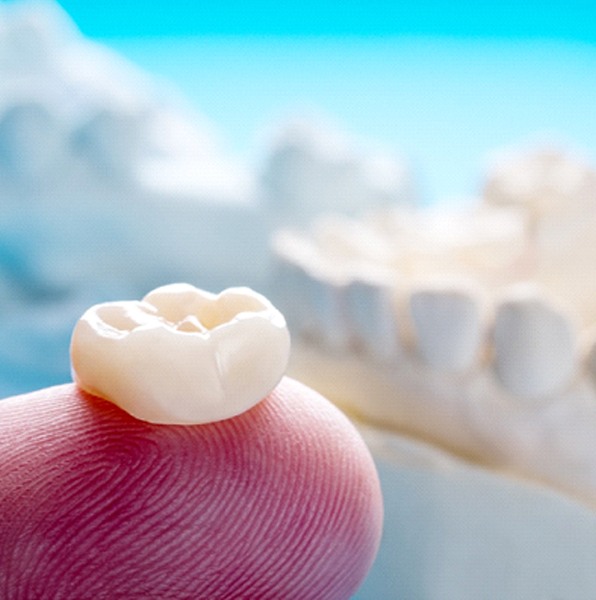
A dental crown is a custom-made cap that fits over the entire visible portion of a damaged or weakened tooth, restoring it to its proper shape, size, and function. Crowns are typically fabricated from high-quality ceramic or porcelain materials that closely mimic the translucency and color of natural enamel. Once cemented into place, a crown becomes a permanent part of your smile, and with the right care, it can provide reliable protection for well over a decade. Research published by the National Library of Medicine indicates that the survival rate for single-unit crowns is favorable across a broad range of clinical settings, underscoring the value of quality materials and skilled placement.
The material selected for your crown depends on where the tooth is located, how much biting force it endures, and what aesthetic outcomes matter most to you. Ceramic and porcelain crowns are our most commonly used options because they blend seamlessly with surrounding teeth and offer excellent durability for both front and back teeth. For patients with particularly demanding bite forces or for teeth in highly visible areas, Dr. Mullens and Dr. Nguyen will evaluate all relevant factors and recommend the material that best serves your long-term needs.
Quality dental care made accessible with payment plans designed to fit your family’s financial needs.

Crowns serve a wide range of restorative purposes, and our team evaluates each case individually to determine whether a crown is the right course of action. Several situations commonly call for crown placement.
A cracked tooth that goes untreated can worsen with every bite, eventually allowing bacteria to enter the pulp and cause more serious problems. Crowns hold fractured teeth together, distribute chewing forces evenly, and protect the tooth from further damage. Even when a crack is not yet causing significant pain, addressing it early with a crown is far less involved than waiting until the damage worsens.
When decay is too extensive to be effectively treated with a filling alone, or when an older filling has begun to fail and compromised too much tooth structure, a crown provides the full coverage needed to stabilize the tooth. We use digital X-rays and our DIGIDOC cavity detection system to carefully assess the extent of any damage before recommending a crown, ensuring that every treatment plan is grounded in a thorough, accurate evaluation.
Teeth that have undergone certain restorative procedures sometimes require a crown to provide adequate protection going forward. A crown reinforces the remaining structure, seals the tooth from reinfection, and restores normal biting function. This is also where crowns play a key role in full mouth restorations, where multiple teeth may need to be addressed as part of a broader treatment plan.
Beyond purely functional applications, crowns can also address cosmetic concerns such as severe discoloration, a misshapen tooth, or a tooth that is noticeably smaller than its neighbors. Because Dr. Nguyen approaches each case with the eye of a trained artist, we take particular care in matching the color, shape, and translucency of every crown to the surrounding teeth, producing results that look genuinely natural.
⭐⭐⭐⭐⭐ Rated 5.0 by Jacksonville patients on Google
Protect and restore your damaged tooth with a custom-crafted dental crown — natural-looking results with affordable monthly payment plans through CareCredit and Cherry.

There are a few different factors that play a role when determining the cost of your restoration:

Severity of Damage: If you need another treatment, like a root canal or filling, before getting a dental crown, this will incur its own cost.
Materials Used: The type of material used to make your crown will affect the cost of your treatment.
How It’s Made: If you get a crown via same-day technology instead of the traditional method, the cost may be different.
Remember that a cheaper crown does not mean a better crown. Quality is important, especially for a restoration that goes in your mouth. You want your crown to have a nice appearance and last for many years.

Dental crowns are considered to be a major procedure, so they generally have around half of their cost covered by dental insurance if they are deemed to be medically necessary. If you need help understanding your benefits and how they work, don’t hesitate to reach out to one of our friendly team members.

If you don’t have dental insurance, this doesn’t necessarily mean that you will be left to pay the entire cost of your treatment all at once. We work with CareCredit – a third-party financing company that can split the cost of your treatment into manageable monthly installments with little to no interest. They offer plans that can fit virtually any budget. To learn more, don’t hesitate to give us a call!
To find out exactly how much you can expect your dental crown to cost, schedule an appointment with us. We’re eager to restore your smile to health!
Our approach to crown placement begins with a comprehensive examination using advanced diagnostic technology, including digital X-rays, intraoral cameras, and Sirona CBCT imaging when appropriate. This detailed assessment gives us a complete picture of the tooth’s condition and allows us to plan your restoration with precision before we begin any preparation work.
During your preparation appointment, we gently reshape the existing tooth to create a stable foundation for the crown. We use The Wand, our computer-controlled anesthesia system, to ensure the numbing process is as comfortable and precise as possible. Digital impressions are then taken of the prepared tooth, eliminating the need for traditional impression trays and providing highly accurate measurements for the final restoration.
Once the final crown is fabricated, we bring you back for the placement appointment, where we check the fit, color match, and bite alignment carefully before permanently cementing it into position. We make any necessary adjustments to ensure you leave with a restoration that feels completely natural. Proper fit is critical not only for your comfort but also for the long-term health of the surrounding gum tissue and adjacent teeth. Patients interested in single tooth implants should know that implant-supported crowns follow a similar final placement process, offering another path to a complete, stable smile when a tooth cannot be saved.
A well-placed crown, combined with consistent oral hygiene at home and twice-yearly visits to our office, can serve you reliably for many years. Brushing twice daily, flossing carefully around the crown margin, and avoiding habits like chewing ice or using teeth as tools all help extend the life of your restoration. During each of your routine visits with us, we will examine the crown for any signs of wear or change and address anything that warrants attention before it becomes a larger concern.
With proper care, your dental crowns can last anywhere between 5 to 15 years. This will include brushing your teeth twice a day, flossing at least once, and rinsing with mouthwash often. You’ll also want to maintain a well-balanced diet and avoid poor oral habits like smoking, biting hard objects, or using your teeth as tools to make the most of your restorations. Be sure to schedule routine checkups and cleanings with us as well to prolong their lifespan. We’ll be able to monitor your oral health, address any developing issues we might find, and offer best practices to maintain your smile.
Our team will construct your dental crowns out of porcelain or zirconia, which are durable and match seamlessly with the rest of your permanent teeth. You may feel some mild soreness for a few days after receiving your restorations, but they should start feeling increasingly natural over time. Your dental crowns will also be custom-crafted to fit your exact smile specifications, so you shouldn’t notice any major difference between them and your remaining teeth.
Unlike your natural pearly whites, dental crowns will be made of cavity-resilient materials. This means they won’t decay like the rest of your smile can. However, it’s important to remember that the underlying tooth can still be vulnerable to cavities. That’s why you’ll need to maintain good oral hygiene for your crown and the rest of your smile. You should especially brush the base of your restoration thoroughly, as this is where bacteria can likely slip underneath and attack your natural tooth. Make sure to also visit our office every six months for checkups and cleanings so that we can ensure your dental crown stays in pristine condition.
Waiting to see if a dental issue will improve can make it more likely to worsen over time. Since your teeth will not be able to heal by themselves, you might consider consulting us about restorations as soon as possible. Without treatment, you can be at risk of needing more complex and costly care, such as tooth extraction and replacements. For this reason, it’s best to schedule an appointment with us so that we can address your situation before it becomes a bigger problem.
At Distinctive Dentistry by Mullens & Nguyen, our state-of-the-art facility in San Marco is designed to make every visit as comfortable and efficient as possible. Our team treats every patient like family, taking time to listen, explain, and collaborate on a treatment plan that genuinely reflects your goals. We accept most dental insurances and offer flexible financing through CareCredit to ensure that high-quality restorative care remains accessible. To learn more about our meet the team page and the experienced providers behind every restoration we offer.
When a tooth needs protection and you want a team that brings both clinical excellence and an artistic touch to every restoration, we are here to help. Please request an appointment today to schedule your consultation and take the first step toward a stronger, healthier smile.
The cost of a dental crown in Jacksonville typically ranges from $800 to $2,000 per tooth, depending on the material used, the complexity of your case, and whether additional treatments are needed beforehand. At Distinctive Dentistry, we offer advanced CAD/CAM restoration technology and flexible financing through CareCredit, allowing you to split costs into manageable monthly payments. Dental insurance often covers around 50% of the cost when a crown is deemed medically necessary. Contact our office for a personalized estimate based on your specific needs.
The dental crown process at Distinctive Dentistry begins with a thorough evaluation where Dr. Mullens or Dr. Nguyen examines your tooth, discusses material options, and develops a personalized treatment plan. We use digital scanning technology to capture precise measurements of your tooth, eliminating the need for uncomfortable traditional impressions. Your custom crown is crafted from premium materials selected to match your natural teeth in color, shape, and translucency. Dr. Nguyen’s fine arts background ensures exceptional attention to detail during the design and fitting process, so your final restoration blends seamlessly with your smile.
The best crown material depends on the location of the tooth, your bite forces, and your aesthetic goals. Porcelain crowns are ideal for front teeth because they closely mimic natural tooth appearance. Zirconia crowns combine strength with a natural look, making them excellent for back teeth or patients with metal allergies. Porcelain-fused-to-metal crowns offer both durability and aesthetics for front or back teeth. Dr. Nguyen’s fine arts background ensures precise color matching so your crown blends seamlessly with your surrounding teeth regardless of the material chosen.
With proper care, dental crowns can last 15 years or longer. To maximize the lifespan of your crown, brush twice daily with fluoride toothpaste, floss daily around the gum line where the crown meets your natural tooth, and visit Distinctive Dentistry every six months for professional cleanings and checkups. You should avoid chewing on hard objects like ice or hard candy, and if you grind your teeth at night, ask about a custom nightguard to protect your crown and remaining teeth from excessive wear.
Yes, dental crowns are one of the most effective treatments for cracked or broken teeth. A crown covers the entire visible portion of the damaged tooth, restoring its strength, shape, and function while preventing further deterioration. At Distinctive Dentistry, Dr. Mullens and Dr. Nguyen evaluate the extent of the damage to determine whether a crown is the best solution or if additional treatment is needed first. Our advanced digital scanning and premium ceramic materials ensure your crown fits precisely and looks completely natural.
Most dental insurance plans classify crowns as a major restorative procedure and typically cover approximately 50% of the cost when the crown is medically necessary, such as to repair a severely decayed tooth or to protect a cracked tooth. Cosmetic-only crowns may not receive coverage. Our team at Distinctive Dentistry helps you understand your specific benefits, files insurance paperwork on your behalf, and offers CareCredit financing for any remaining out-of-pocket balance so cost never delays the care you need.
A damaged tooth doesn’t have to mean a compromised smile. Dr. Mullens, DDS, and Dr. Nguyen, DMD craft custom dental crowns using high-quality porcelain and ceramic materials — built to protect your tooth, restore full function, and blend naturally with your surrounding teeth.
⭐⭐⭐⭐⭐ 5.0 Rating on Google | Jacksonville’s Top-Rated Dental Office
CareCredit and Cherry financing make dental crowns accessible with low monthly payments. We accept most dental insurance. Schedule your consultation today or call us at (904) 399-3163.


If you have any food debris or an object stuck between your teeth, don’t try to remove it with a toothpick or any sharp objects, as this could damage your gums. Typically, gently flossing around the tooth and rinsing your mouth with saltwater can help dislodge it. However, if you’re not having any luck, you can also give our office a call. Our dental hygienists have all of the necessary tools to safely remove the debris.
Is Jaw Pain a Dental Emergency? Lockjaw, jaw tension, and pain are just a few of the many different types of jaw pain. If your discomfort is chronic, our team can help you determine the underlying cause of it and refer you to a specialist if necessary. However, if your pain is a result of an impact, visit your local emergency room.
How You Should Handle Jaw Pain: Our team is happy to provide you with further guidance over the phone if you’re unsure of where to go for help. You can place an ice pack on the outside of your face to relieve any discomfort.
How We Treat Jaw Pain: If you believe your jaw is broken, dislocated, or damaged due to trauma, visit your local ER immediately. If it’s a reoccurring issue, our team can help you determine best next steps for finding relief after conducting an examination.
Is an Injury to the Gums, Lips, or Tongue a Dental Emergency? If your oral injury doesn’t stop bleeding after 10 minutes, you may need to go to the emergency room. Or, if you’re conflicted about what to do, give our office a call and our team can help.
How You Should Handle an Injury to the Gums, Lips, or Tongue: Oral wounds can bleed a lot, and when the blood mixes with the saliva, it can make the injury look a lot worse than it is. You can stop the bleeding by using a clean washcloth or piece of gauze and pressing it against the cut. A cold compress can help to reduce any swelling that may occur.
How We Treat Injuries to the Gums, Lips, or Tongue: Our team typically doesn’t see patients for injuries. If you require stitches or the bleeding doesn’t stop within 10 minutes of placing pressure on it, visit your local emergency room.
Is a Loose Permanent Tooth a Dental Emergency? If your tooth is wiggling in its socket or partially dislodged, try to get to our office as soon as possible to prevent any further damage. If you’re experiencing pain, our team can provide you with first aid guidance over the phone.
How You Should Handle Loose Permanent Teeth: Avoid touching your tooth and eating any foods (especially those that are chewy or sticky), and rinse your mouth with lukewarm saltwater to remove any debris and cleanse the area. Avoid flossing or brushing your teeth until you’re able to see us.
How We Treat Loose Permanent Teeth: If your tooth has become partially dislodged due to impact, our team may be able to salvage it and see if the roots are able to re-fuse with the bone. In the case that your tooth can’t be saved, we may recommend an extraction and replacement with a dental implant or bridge.
Is My Broken Denture a Dental Emergency? Whether your denture has broken to the point of it being unwearable or it just has a crack, you should never wear a damaged prosthetic. It can lead to irritation of the oral tissues in addition to jaw discomfort. If you have existing teeth and try to wear your damaged denture, it could also harm those teeth. Call our office immediately so our team can assess your prosthetic.
How You Should Handle a Broken Denture: Although your local department store likely sells a denture repair kit, do not try to superglue or repair your own dentures. The best option in this scenario is to see a professional as soon as possible.
How We Treat Broken Dentures: Our team will examine your dentures and see if we’re able to repair them. If they’re damaged beyond repair, we can start the process of replacing them for you.
Is a Lost Filling or Crown a Dental Emergency? Yes, both of these situations warrant an immediate call to our Jacksonville dental office. That way, we can repair or replace your restoration as quickly as possible.
How You Should Handle a Lost Filling or Crown In addition to reaching out to us to schedule an appointment, we recommend not eating anything crunchy, hard, or sticky. Additionally, keep your restoration somewhere safe, like a small, clean container.
How We Treat Lost Fillings or Crowns There are some cases where we can re-cement your restoration back in place, like if your dental crown is relatively new and in good condition. Other times, our only option is to replace your dental crown or filling with a new one.
Is My Knocked-Out Tooth a Dental Emergency? Since this dental injury can cause a significant amount of pain and there is only a small window of time where we can save your tooth (about 60 minutes), the answer is “yes!” So, don’t hesitate – contact our Jacksonville dental team right away to schedule an emergency appointment.
How You Should Handle a Knocked-Out Tooth Calling us is an important first step. This ensures that we can schedule an appointment for you with one of our dedicated emergency dentists right away. Plus, it allows us to guide you through the process of preserving the root of your tooth – whether that’s by placing it back in its socket or putting it in a clean container filled with milk.
How We Treat Knocked-Out Teeth Fortunately, a knocked-out tooth can sometimes be saved. If that’s not the case for some reason – like you weren’t able to find your tooth – then we will instead begin the process of replacing it with a dental bridge or implant so the look, health, and function of your smile are restored.
Are Very Sensitive Teeth a Dental Emergency? Very sensitive teeth can be a dental emergency. That’s why it’s important to consider how long you’ve been experiencing symptoms and if they are present in tandem with others, like pain when biting down.
How You Should Handle Very Sensitive Teeth There’s really only one thing you can do until your appointment: try to avoid things that could exacerbate your discomfort. In other words, don’t drink anything really hot, don’t eat anything really cold, and take OTC pain medication as directed on the label (if needed).
How We Treat Very Sensitive Teeth That depends on what’s causing your dental sensitivity. If it’s a cavity, then it’s likely that a tooth-colored filling or dental crown is the answer. If it’s an infection in your gums, then gum disease treatment is needed instead.
Is a cracked tooth a dental emergency? Cracked teeth are considered dental emergencies and you’ll need to visit your emergency dentist as soon as possible. Leaving your tooth untreated can allow it to be vulnerable to further damage and bacteria. Before the situation worsens, schedule an appointment with our team so we can determine the best way to address your tooth.
How you should handle a cracked tooth: Refrain from chewing on that side of your mouth, otherwise you could end up disturbing your injured tooth. Take over-the-counter pain relievers to minimize discomfort. You can also rinse with saltwater to keep your tooth bacteria-free. If you notice any sharp or jagged edges on your tooth, you can use dental wax or sugar-free gum to protect your soft oral tissue.
How we treat cracked teeth: We’ll examine your cracked tooth to determine the cause of the situation as well as the proper treatment for it. If the crack is minor, then we can typically address it with composite resin to improve and strengthen your tooth. For more severe damage, you may require a dental crown to repair the structure and prevent future discomfort. If the tooth cannot be saved, then we’ll likely have to extract it and replace it with something else, such as a dental bridge, partial denture, or dental implant.
Is a chipped tooth a dental emergency? Chipping your tooth isn’t always considered an urgent dental situation, so it isn’t the end of the world if you don’t get it treated right away. That said, leaving it exposed to bacteria for too long can lead to problems later on. Before the situation can become worse, it’s best to visit your dentist for help.
How you should handle a chipped tooth: Until you’re able to see us for treatment, be sure to avoid chewing on that side of your mouth. Be gentle when brushing your teeth and gums, and don’t hesitate to use dental wax to cover up any rough or sharp edges you might notice. This can help you prevent harming your cheeks or other soft oral tissue.
How we treat chipped teeth: Chipped teeth can typically be treated by using composite resin to repair and improve them. However, if the damage is more visible and toward the front of your smile, then veneers might be the longer-lasting solution you’re looking for.
Is my toothache a dental emergency? Toothaches can be due to various reasons, some of which might not be particularly urgent. Even so, this can sometimes be an indication of a more serious dental emergency, such as an oral infection. That’s why it’s best to visit your dentist sooner rather than later so that they can address the underlying problem before it grows.
How you should handle a toothache: Rinse your mouth with saltwater to sanitize the area, dislodge any stuck objects between your teeth, and help alleviate any discomfort. You can also take over-the-counter pain medications to further minimize the aching.
How we treat toothaches: Our team will need to thoroughly evaluate your smile to determine the root cause of your toothache. If it’s due to periodontal issues, then we’ll provide gum disease treatment. Other procedures to get rid of your toothache might involve root canals or tooth extractions, if necessary. We’ll be sure to walk you through your options before moving forward with any treatment.